


What a Tragedy...
- Gillian

- Apr 19, 2019
- 5 min read
In the wake of the tragic burning of the Notre Dame, many immediately turned to social media as their primary source of information. While traditional news outlets like CNN and NBC were quick to live-report the unfolding events, their coverage lacked a key component: the status of people’s friends and loved ones and personal stories of those that lived near by or have visited. Social media can be immensely helpful during times of tragedy – but it can be destructive, too. If you’re using social media for marketing, what should you say following a tragedy like the deadly blasts at the Boston Marathon, the horrific elementary school shootings in Newtown, Conn., or the hurricane Harvey?

The age of digital marketing brings with it new challenges, including how to respond during a national tragedy. Remember, as recently as Sept. 11, 2001, we had no MySpace, much less Facebook, Twitter or YouTube. Except for email, no vehicle for delivering instantaneous marketing messages existed. After 9/11, one of the most painful days in American memory, most of us had time to pause, reflect and put on hold print, radio and TV marketing campaigns that might be viewed as inappropriate or offensive.
That’s the new role that social media has taken on in tragic events like bombings, shootings and natural disasters. While websites like Twitter and Facebook provided vital updates for news coverage, the ever-present problem of false information has prevented these networks from becoming trustworthy news sources. Instead, social media has adopted a different role in times like this: providing worried friends and family with the comforting update, “I’m OK.”
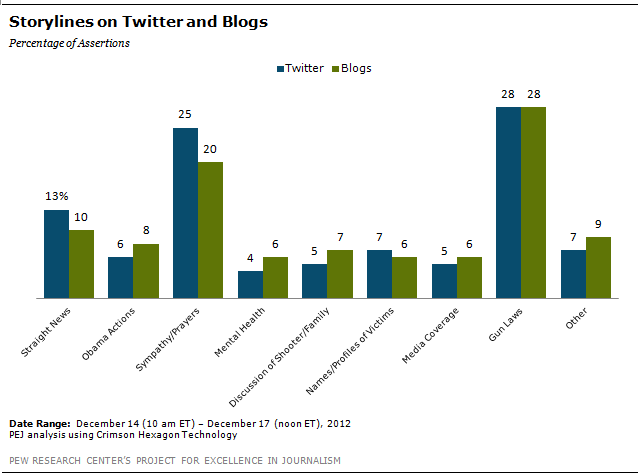
In tragedy, social media has become much more than a news source. It has become an outpouring of support from people worldwide and a virtual meeting place for those affected by the events. Today, sites like Facebook and Twitter play a vital role in bringing nationwide news to a personal level – spurring on kindness and support in the process.
If a company wants to make a difference, technology affords you unique tools they can use to make a positive impact. And while they may not be able to save the world and help people 24/7 -- people have to realize you run a company and not a nonprofit -- a little initiative with the aid of technology can go a long way to help people.
But for an individual or general population, it is a bit different. I want to use an example that is modern, an recent, the Ariana Grande concert bombing in Manchester.
Those in the area checked in with Facebook to alert friends we were safe, while others tried to help by retweeting missing person posts and calls to action, sharing where to go for a free hotel room and how to donate food, blood, or cash. Many expressed sympathy, grief, and solidarity — our thoughts are with the victims, #prayforManchester, and replacing profile photos with images of the city or "I (heart) MCR" designs.
Before social media and the internet, a violent event like a terror attack might spark us to get together in person to talk about it — and that still happens, Mancunians gathered in their thousands in Albert Square, while the rest of us gathered online. "Now we have this really great online space where you can find people who are trying to process the tragedy just like you are," said Dr. Jennifer Goldbeck, director of the Social Intelligence Lab and a professor at the University of Maryland. "That way of socializing can bring a lot of comfort and help us understand what we're feeling, just by talking about it."

Nicole Ellison, professor in the school of information at the University of Michigan, agreed, adding that alongside emotional support our need for information is high. "For some kinds of connections and information, social media is probably replacing other channels, such as a phone call or running out to buy a newspaper or watching the 6:30 TV news," she said. "Social media has probably changed how we respond but the basic human needs it meets — social connection and information — are the same." Alongside expressions of empathy, the online response to the terror attack also saw trolls spreading fake missing person reports — shared by well-meaning tweeters and even news channels — as well as hate-inciting posts, and nasty jokes. An attempt at dark humor may help some cope, but perhaps better kept among friends than for all to see on social media.
For the rest of us non professionals or brands trying to be helpful in times of crisis, the desire to retweet every plea for assistance is understandable, a helpful tip is to take the time to make sure they're real with a quick click through to the original account or dropping a picture into Google's reverse image search to see if it's really new.

Another example I can use to describe how social media impacts us during times of terror is the Parkland shooting in Florida. the tragedy at Marjory Stoneman Douglas High School in Parkland, Florida, is just the latest reminder. A 19-year-old former student, Nikolas Cruz, killed 17 people with a semiautomatic rifle as students “held onto their phones for dear life,” according to The New York Times. So I did a little more research on this case, because it dealt with a generation that grew up on social media. I wanted to know what type of content they were posting and on what platforms. During the rampage, students sent tweets, snaps, and text messages that showed a frightening vantage point as they told the story of what was happening in real time. One high school freshman tweeted, “My school is being shot up and I am locked inside. I’m fucking scared right now,” while others posted shaky Snapchat videos of their classmates hiding under desks with gunshots audible nearby. Text messages between students and their parents are particularly horrific, with one reading, “If I don’t make it I love you and appreciated everything you did for me.” The tragedy prompted reflections on a frightening, and increasingly familiar, reality in which young people are in a position to broadcast violent events, even as they are unfolding. While the live coverage and immediate access could be perceived as a positive thing, helping Americans grapple with a crisis of school shootings, some commentators are calling attention to apps and tools that can potentially make such situations worse. “In a live shooting situation, the possible consequences are deadly,” David Vaile, co-convener of the Cyberspace Law and Policy Community at Australia’s University of New South Wales, told the Herald. “Without realizing, you could be broadcasting your location and making yourself more vulnerable in this situation.”

So what is the right thing for your brand to do during a death or a tragedy? It all depends. If it is real and there are facts behind it and it is not fake, then go right ahead and be very self conscious about what you are going to post. You want to make sure it is not offensive, and its better to keep it short, simple, and sweet. Some other people suggest just to stay dark and not say anything at all, to avoid the risk of offending someone or an event. So at the end of the day, it is all up to your brand and what kind of light you want to be perceived in.



Comments